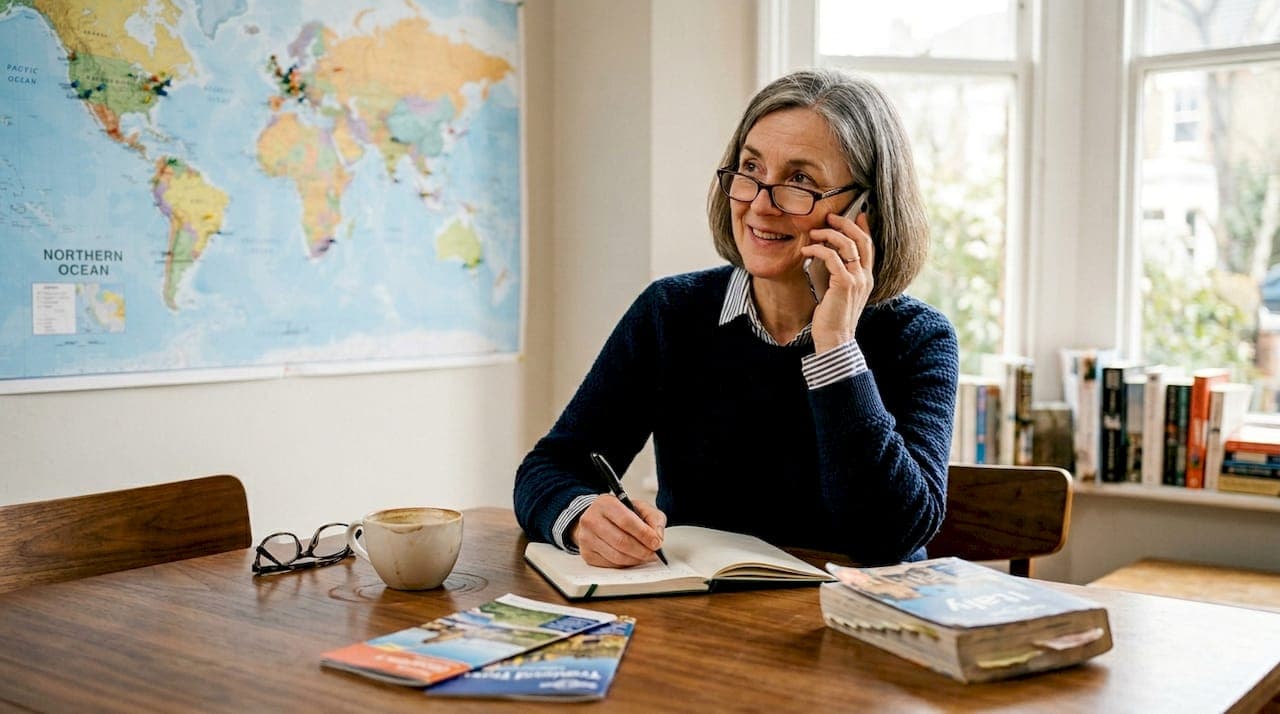
Most luxury vacations promise the world and deliver a very similar version of it. You've paid for the best suite, the private transfers, the Michelin-starred dinners, and yet something feels borrowed rather than built for you. That gap between expensive and personal is exactly what bespoke travel is designed to close. This guide walks you through every stage of designing a trip that reflects who you actually are, what genuinely moves you, and how you want to feel when you're there. From clarifying your vision to adding the final emotional touches, you'll find a practical framework for creating something that no one else could replicate.
Table of Contents
- Defining true luxury and bespoke travel
- Clarifying your vision: Setting priorities and intentions
- Building your trip: Selecting destinations, experiences, and logistics
- Final touches: Personalizing details and ensuring seamless execution
- The truth most travelers miss about bespoke trips
- Plan your bespoke journey with Southern Travel Boutique
- Frequently asked questions
Key Takeaways
| Point | Details |
|---|---|
| Invisible luxury matters | The most memorable bespoke trips focus on experience, not excess. |
| Preparation is key | Clarifying intentions and group needs ensures a seamless journey. |
| Expert help elevates | Travel professionals add emotional value and exclusive access to your trip. |
| Balance structure and spontaneity | A flexible itinerary allows for serendipity and true personalization. |
Defining true luxury and bespoke travel
There's a version of luxury most of us recognize immediately. Thread count, champagne on arrival, a butler who appears before you've finished thinking. It's impressive, and it's also the same at a hundred different properties. Bespoke travel operates on a different principle entirely.
The distinction matters more than people realize. Traditional luxury is about the quality of what's provided. Bespoke travel is about why it's provided, and for whom. A private villa in Bali is luxurious. A private villa in Bali with a yoga instructor who specializes in the exact practice you've been doing for three years, a chef who knows your dietary preferences before you arrive, and a curated itinerary built around your pace rather than a standard program is bespoke.
"True luxury is invisible. It's space over excess, human judgment applied thoughtfully, and relationships built over time that allow for repeated, genuine delight." Luxury tourism research puts this plainly: the best experiences don't announce themselves.
Here's a useful comparison to keep in mind:
| Traditional luxury | Bespoke travel |
|---|---|
| High-end amenities for all guests | Experiences designed for you specifically |
| Fixed itineraries with premium upgrades | Flexible structure built around your priorities |
| Service excellence as a standard | Emotional resonance as a goal |
| Visible extravagance | Invisible, effortless perfection |
| One-time transaction | Long-term relationship with your planner |
This is also where the conversation about technology becomes relevant. AI tools have made travel research faster and more efficient, but personalization in travel design shows clearly that while AI aids efficiency, human experts provide the emotional resonance that makes a trip truly memorable. An algorithm can find you a great hotel. It cannot know that you proposed to your partner in Tuscany and want your anniversary trip to quietly echo that without being obvious about it.
When you explore luxury destinations through a specialist lens, you're not just browsing options. You're starting a conversation. That's the foundation of a boutique travel philosophy built on knowing clients rather than categories.
Clarifying your vision: Setting priorities and intentions
Once you recognize the unique value of real bespoke travel, you're ready to imagine your own. And this stage, the visioning stage, is where most people either skip ahead too quickly or get overwhelmed by options.
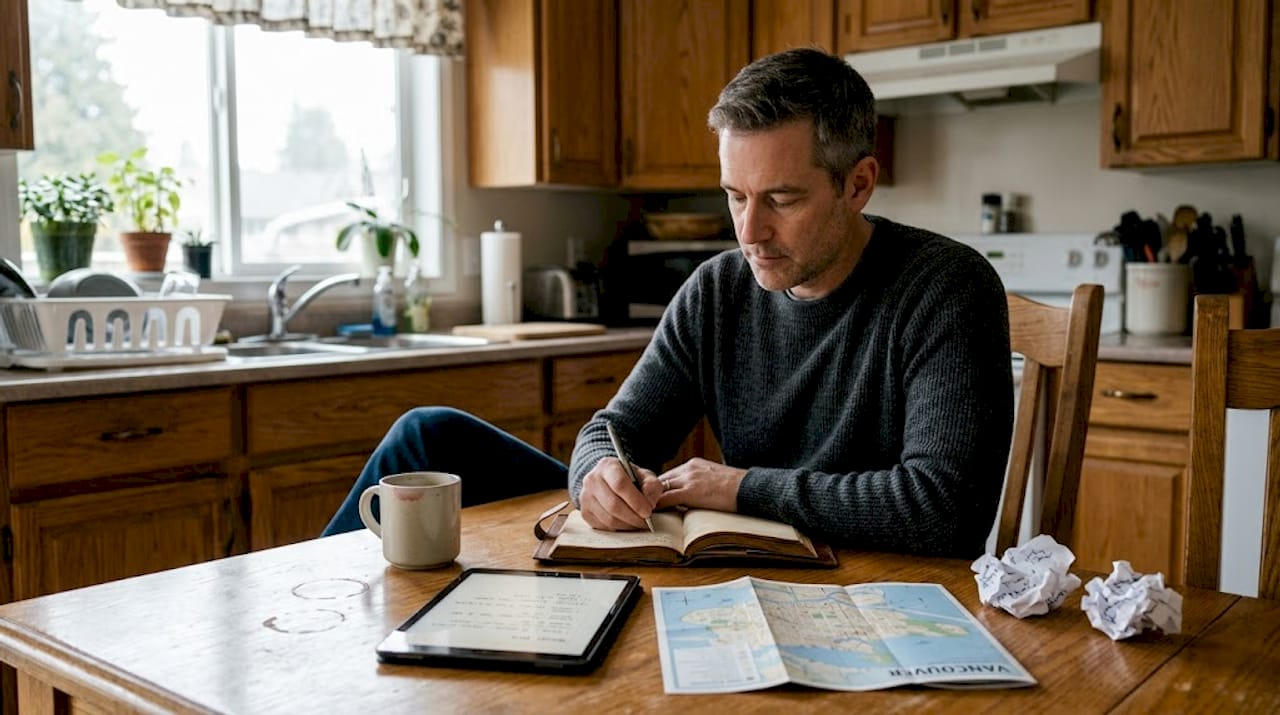
Start with a simple but powerful question: what do you want to feel on this trip? Not what you want to see or do, but how you want to feel. Rested. Exhilarated. Connected. Culturally immersed. The answer shapes everything that follows.
From there, separate your must-haves from your nice-to-haves. Be honest about this. Must-haves are non-negotiable: a private pool, no more than two flights, a specific region, a certain level of medical access. Nice-to-haves are the aspirational extras that would delight you but won't define the trip if they're absent.
For groups, this exercise becomes even more critical. Multi-generational travel requires age-appropriate activities, milestone trips need emotional significance, and solo adventurers prioritize safety and genuine immersion. What works for a 35-year-old who wants to dive every morning is very different from what works for their 68-year-old parent who wants comfort and cultural depth.
Here's a starting checklist to work through before you speak to anyone:
- Travel style: Active, relaxed, cultural, adventurous, or a blend?
- Group dynamics: Ages, mobility considerations, shared interests versus individual preferences
- Non-negotiables: Accommodation type, regions, budget ceiling, travel duration
- Emotional goals: Anniversary, milestone, reset, celebration, exploration
- Practical constraints: Dietary requirements, medical needs, visa restrictions
Pro Tip: Write your vision down before you start researching destinations. It sounds obvious, but the act of writing forces clarity. Bring that document to your first conversation with a planner. It will save hours and produce a much better result.
When you're planning bespoke trips with a specialist, this preparation is what allows them to do their best work for you.
Building your trip: Selecting destinations, experiences, and logistics
With your intentions clear, it's time to make choices that give your journey its distinct character. This is where the real architecture of a bespoke trip takes shape.
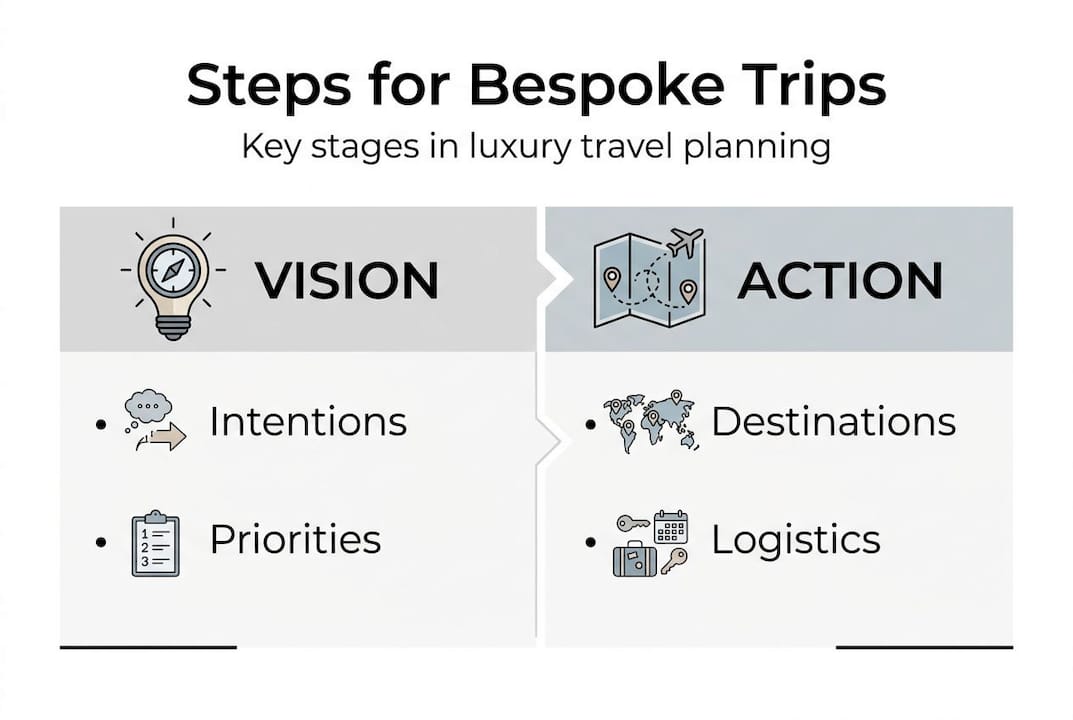
Choosing a destination isn't just about picking a country from a wish list. It's about matching a place to your vision. Safari in Kenya offers something fundamentally different from safari in Botswana, even though both are extraordinary. The Maldives suits a couple wanting complete seclusion. Thailand suits someone who wants wellness alongside culture and activity. The question is always: which destination serves your goals rather than which destination sounds impressive.
Once you've narrowed your destination, think in layers:
- Anchor experiences: The two or three things that define the trip. A private dive with a marine biologist. A cooking lesson with a local family. A sunrise hot air balloon over a landscape you've dreamed about.
- Supporting experiences: The texture around the anchors. A particular restaurant, a day trip, a guided walk through a neighborhood most tourists never find.
- Unscheduled time: Deliberately left open. More on why this matters in a moment.
- Logistics: Transfers, accommodation sequencing, pacing between locations. This is where specialist knowledge saves you from costly mistakes.
- Contingencies: What happens if weather changes, a booking falls through, or someone in the group needs to adjust?
Focused expertise in travel design consistently outperforms broad coverage. A planner who knows Bali deeply will find you experiences that no search engine surfaces.
Pro Tip: Don't try to do everything. The trips people remember most are the ones with depth, not breadth. Two weeks in one region done properly beats four countries in two weeks every time.
For custom travel inspiration across destinations from the Maldives to European villa breaks, real examples from real trips can help you visualize what's actually possible.
Final touches: Personalizing details and ensuring seamless execution
After logistics are set, bringing emotional resonance and flawless execution creates the true bespoke experience. This is the stage most people underestimate, and it's where the difference between a good trip and an unforgettable one is made.
Personalization at this level isn't about adding monograms to your towels. It's about the small, considered details that tell your guests or your partner or your family that someone was genuinely thinking about them. A welcome note that references a shared joke. A bottle of the wine you mentioned loving. A room arranged so the view is the first thing you see when you wake up.
Here's what to review before departure:
- Confirmations: Every booking confirmed in writing, with contact details for each supplier
- Special moments: Surprises, celebrations, or private experiences flagged and briefed to the relevant teams
- Dietary and medical needs: Communicated to every property and restaurant in advance, not just the first one
- Emergency contacts: Local numbers, insurance details, and a point of contact who can respond if something changes
- Pacing review: Does the itinerary breathe? Are there recovery days after long travel days?
The science of invisible luxury is built on long-term client relationships that allow planners to anticipate needs before they're expressed. That's only possible when someone knows you well enough to think ahead on your behalf.
Last-minute changes happen. A flight gets canceled, a restaurant closes unexpectedly, someone in the group falls ill. The quality of a bespoke trip is also measured by how gracefully these moments are handled. Client travel stories often highlight not the perfect moments but the moments when something went sideways and was resolved so smoothly it barely registered.
The truth most travelers miss about bespoke trips
Here's the thing nobody tells you when you start designing a bespoke trip: more customization does not automatically mean a better experience. In fact, over-planning is one of the most common ways people undermine their own trips.
There's a tendency, especially among detail-oriented travelers, to want every hour accounted for. It feels responsible. It feels like control. But the moments people talk about for years are almost never the ones that were scheduled. They're the afternoon you wandered into a village market by accident. The conversation with a local fisherman that turned into a two-hour lesson in something you never expected to care about. The evening you stayed at the table long after dinner because the light was perfect and nobody wanted to move.
Invisible luxury is, at its core, about creating space. Space for serendipity, for rest, for the unexpected. A great bespoke planner doesn't just fill your itinerary. They protect your unique travel philosophy by knowing when to leave gaps.
The best trips have a spine, not a script. Build the anchors, protect the space between them, and trust that the best moments will find you.
Plan your bespoke journey with Southern Travel Boutique
You now have a real framework for designing a trip that's genuinely yours. The next step is working with people who've built their entire practice around making exactly this happen.
At Southern Travel Boutique, every trip is hand-built from scratch. Whether it's a horse and safari combination in East Africa, a wellness retreat in Thailand, a diving and golf escape, or a European villa honeymoon, nothing is templated. You can start your bespoke trip with a simple conversation, view tailored experiences across our destination portfolio, or see our process to understand how we work before you commit to anything.
Frequently asked questions
What makes a trip truly bespoke versus just luxurious?
A bespoke trip is fully built around your specific needs, interests, and emotional goals, while luxury typically stops at high-end amenities and upgrades. As invisible luxury research confirms, the difference is human judgment and personal knowledge, not just price point.
Can I plan a bespoke trip entirely on my own?
You can handle parts of it yourself, but specialist planners add emotional resonance and unlock exclusive experiences that most travelers simply won't find independently. Human expertise in design consistently delivers what no search engine can replicate.
How can a bespoke trip suit multi-generational families?
A good planner creates parallel itineraries with tailored activities, appropriate pacing, and shared anchor moments that work across ages. Age-appropriate travel design is a core skill for any specialist working with families.
How far in advance should I start planning a bespoke trip?
Start 6 to 12 months ahead for the best access to exclusive experiences, private accommodations, and specialist guides who book out quickly.
What's the biggest mistake in bespoke trip design?
Over-scheduling. Leaving no room for unexpected moments is the fastest way to turn a bespoke trip into a very expensive checklist. Space over excess is the principle that separates a great trip from a truly memorable one.